
PORT-A-LIGHT
-PROBLEM-
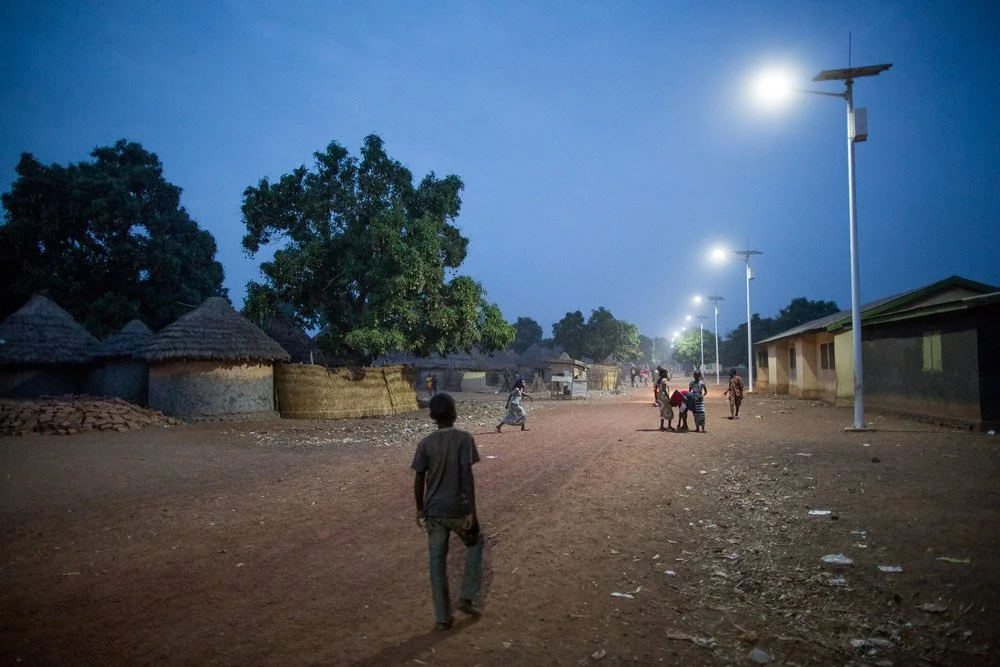
In Sub-Saharan Africa, people lack reliable access to electricity which makes it difficult for households to have safe and affordable lighting at night. This project aims to develop a device that converts energy from bicycle riding into stored electrical energy that can power lights in homes after dark.
Functional Requirements:
After doing some research about the Sub-Saharan communities, I discovered that the main mode of transport was to bike. Therefore now I can relate converting energy from a bicycle to stored electrical energy. Some functional requirements for the project are:
Energy Capturing: Convert bicycle movement to energy
Energy Storage: Store energy for later use
Lighting: Use the battery for light output
Simple Interface: Low maintenance indicators for different battery status
Connection type: Easy to use and replace connection type between batter, generator and light
Portability: Must work with common bicycles and quick to install/remove
Cost: Must be low cost so that funding can result to more products and lower cost to purchase
Power Production Estimates:
Bicycle Roller Stand
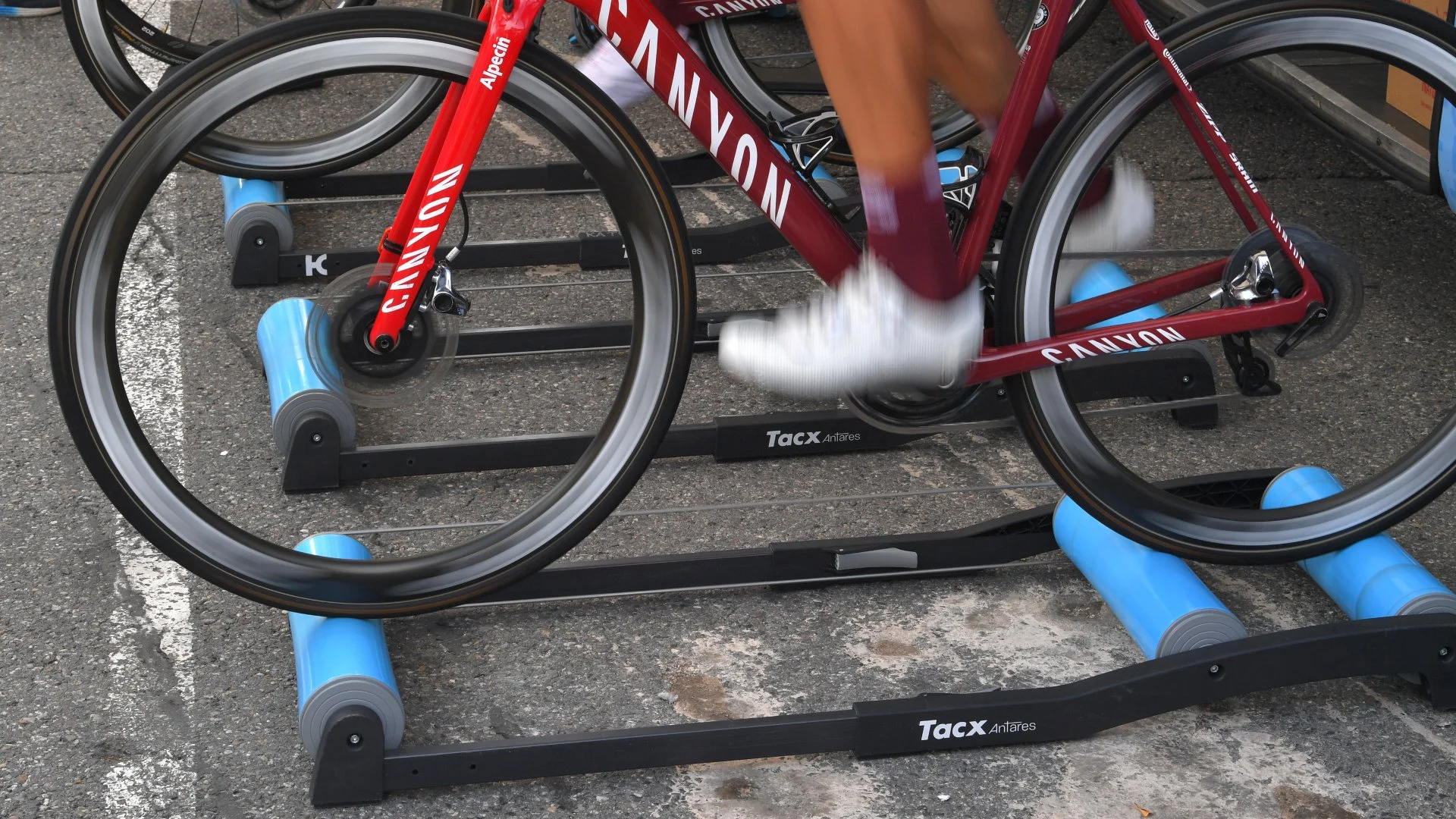
The user would place their bike on the roller and then would ride which would power a chain system that runs a generator and would charge up their batteries.
Pros:
No bike modifications
Usable by multiple users
Allow access to many people
Low cost to be used for many people
Cons:
Balancing may be an issue
Only used for energy production
Not portable
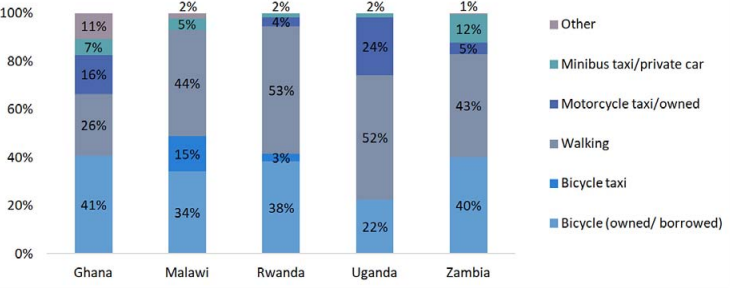
ENERGY TRANSFER

DESIGN ASSUMPTIONS
To calculate the estimated power mechanical energy available from a bike rider, several assumptions were made with research for bike riders in rural areas.
Pros:
High efficiency
Less loss from friction
Works in dry and wet conditions
Battery To Light Source Designs
Typical cycling distance: 5–15 km per day
Average cycling speed: 12–15 km/h
Average sustainable rider power: 50–100 W
Expected generator efficiency: 40–60%
Target lighting power: 3–6 W LED lights
A healthy adult can sustain roughly 100–150 watts of mechanical power via bicycle for an hour however due to the difficult terrain of the bike riders in Sub Saharan African, the expected mechanical power produced is more likely between 50-100W. Additionally, we assume the generator to have an efficiency of only 50% due to slipping, friction and other factors.

The energy produced for a 45 minute ride could be,
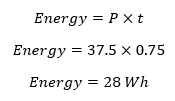

Therefore with the energy produced, a 5W light bulb could run for 5.6 hours which is enough to light up a house between sunset and bedtime.
CONCEPT GENERATION
I thought of 3 possible designs that could work for turning mechanical riding power into electricity.
Chain Integrated System
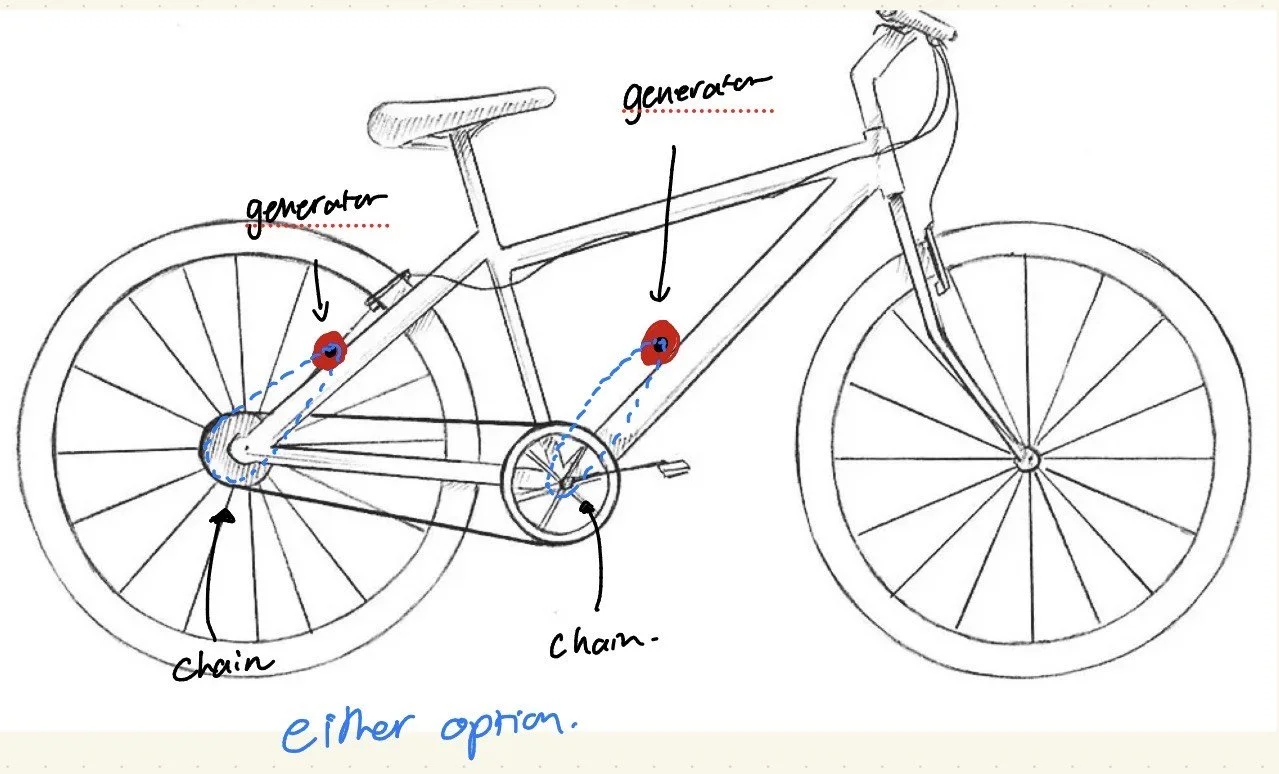
The chain is attached to either the wheel gears or pedal gears and it would power the generator through a chain system.
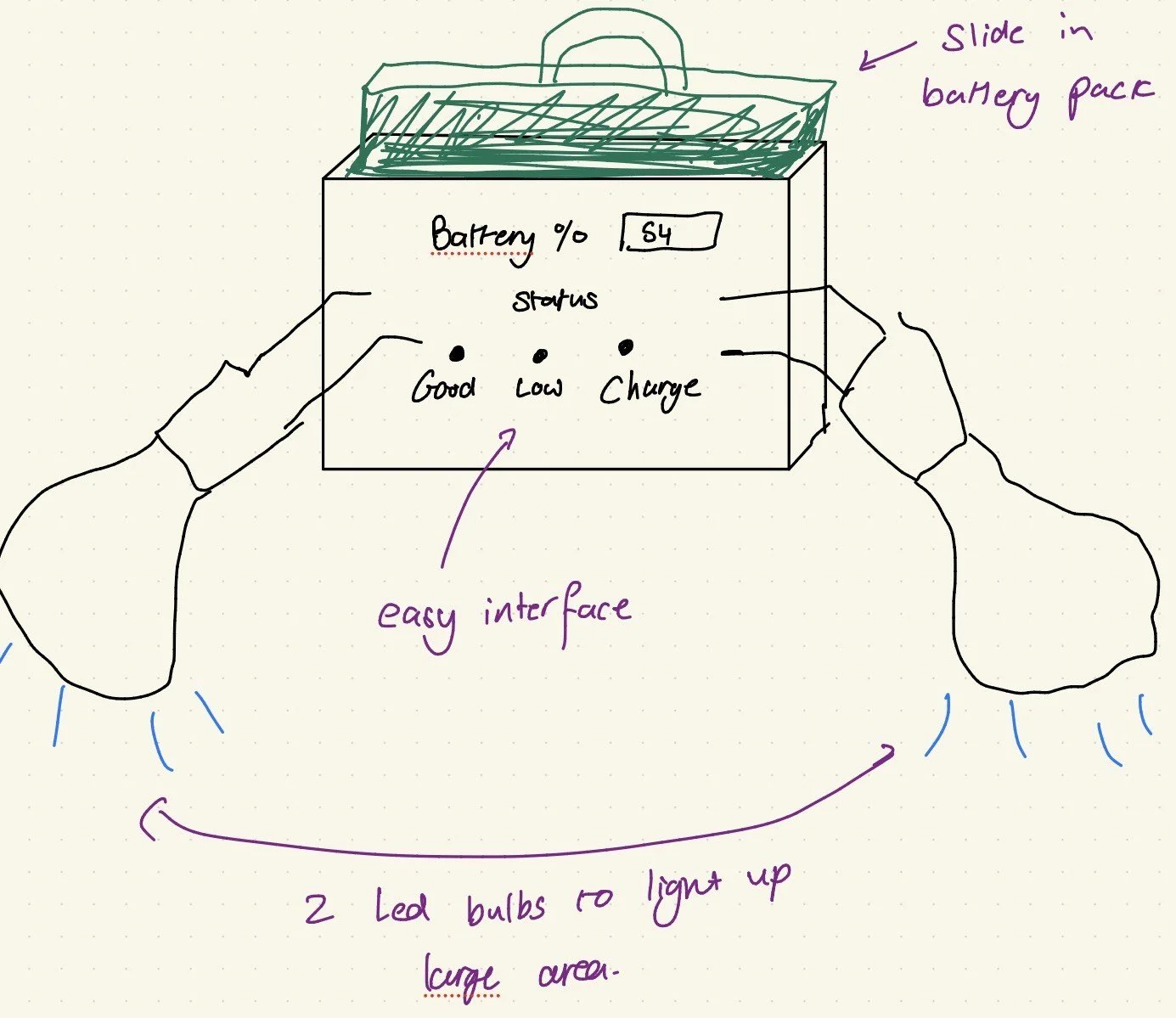
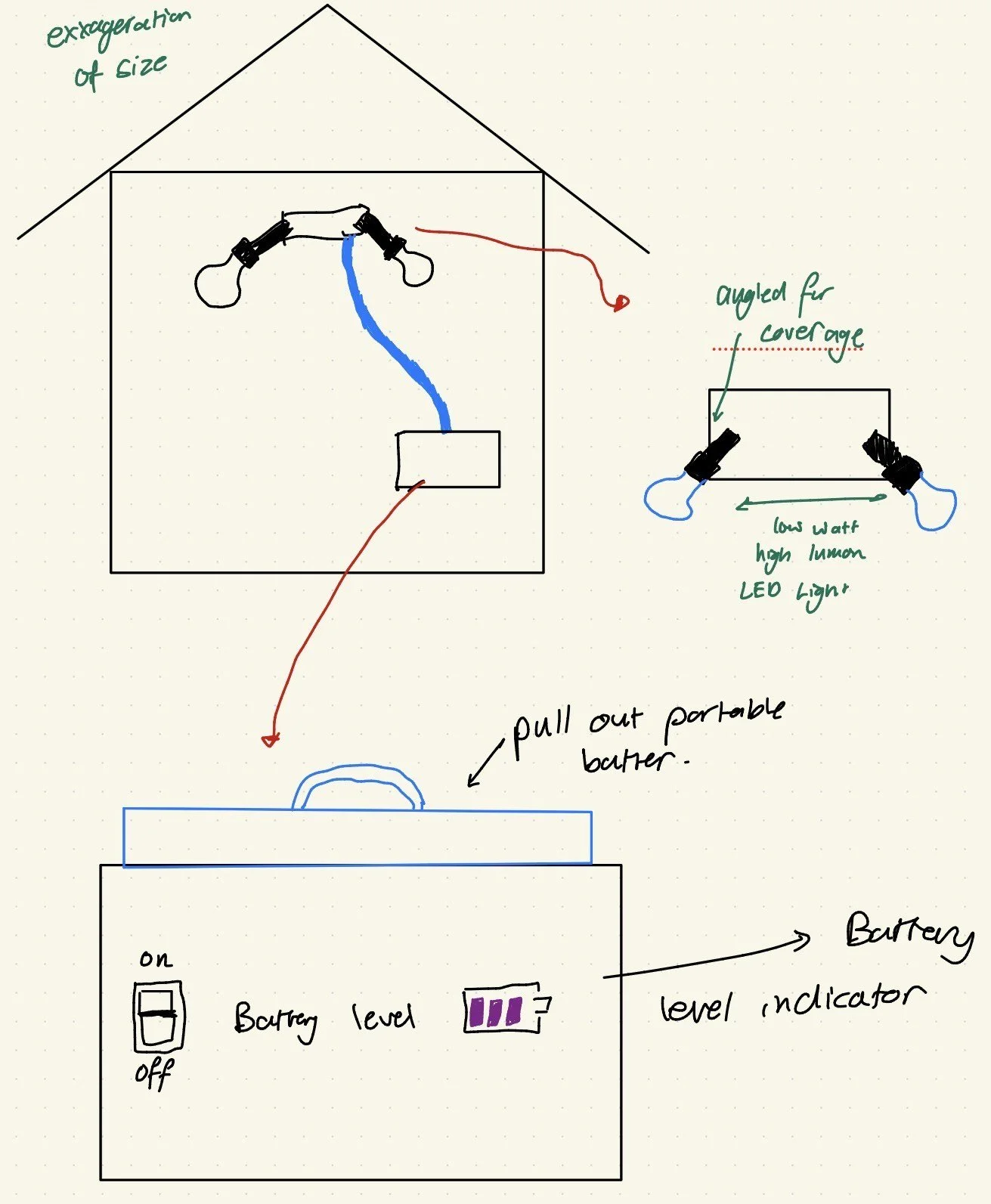
From the 2 designs, both use an exposed LED light for easy maintenance and also angled so that the light can spread in a wider range. The first design above was my initial design thought where the portable sliding battery pack slides in at the top and powers the LED lights with a simple battery indicator. However this means that the light box will have to be placed lower which reduces the LED light spread. Therefore I thought of designing a 2 part system where a power box is connected to the light box. This allows for easier access to the battery pack and the LED lights will have a wider spread however reaching the LED light for maintenance will be more difficult.
Cons:
Complex installation due to different bike models
Might interfere with normal bike operation
Chains may rust over time
Wheel Integrated System
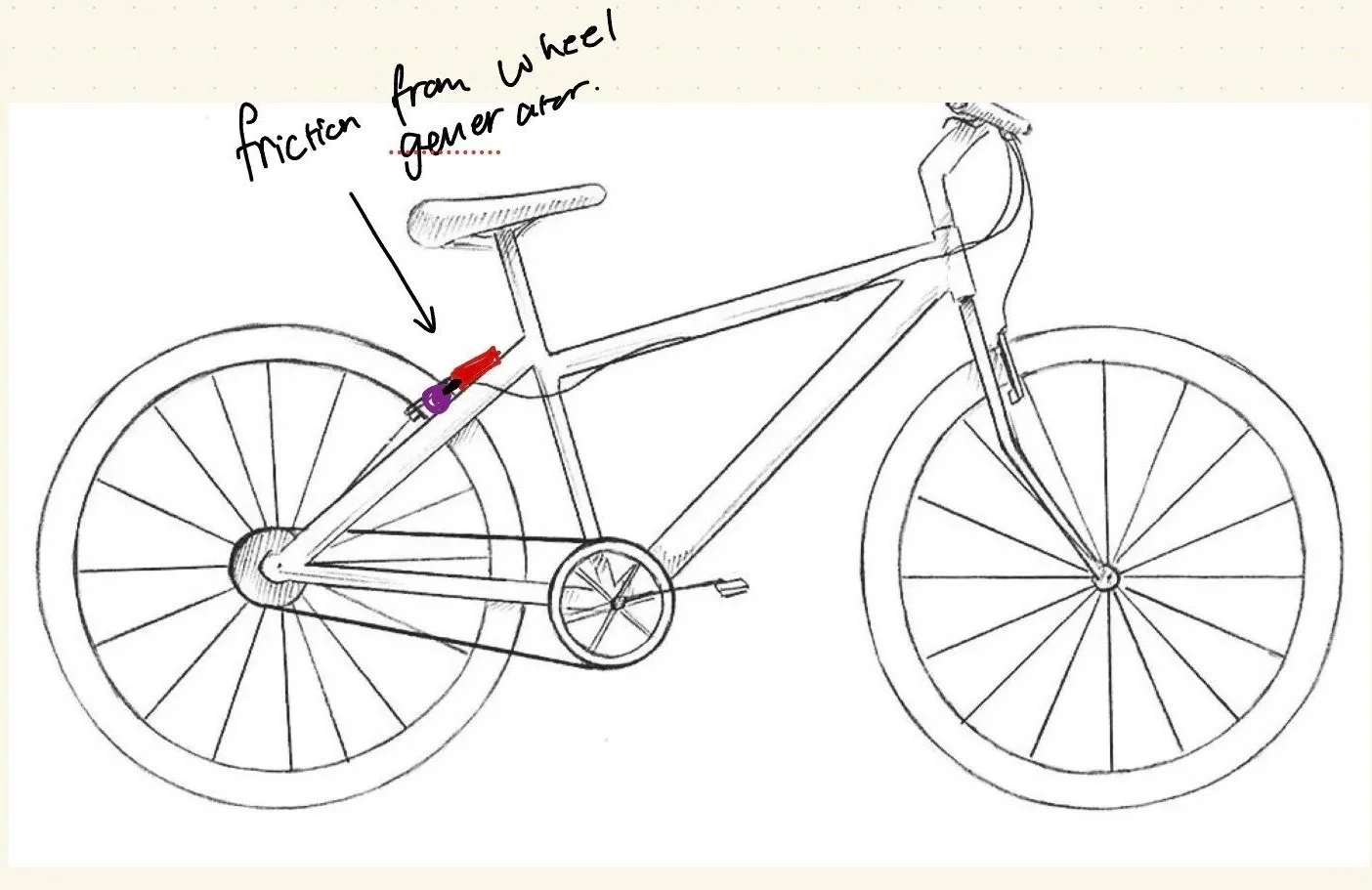
The generator is attached to a wheel which uses friction against the bicycle wheel rim.
Pros:
Simple design and manufacturing
Easy to install and remove
Compatible with most bikes
Cons:
Energy loss due to friction
Tire and bike wheel rim wear
Wet or dirty conditions may introduce slipping